My
Projects
A showcase of my work in Unity development, from games to simulations.
Polytraumatisé – Multiplayer VR Medical Simulation
Unity Developer – Octapharama (via Snack Group)
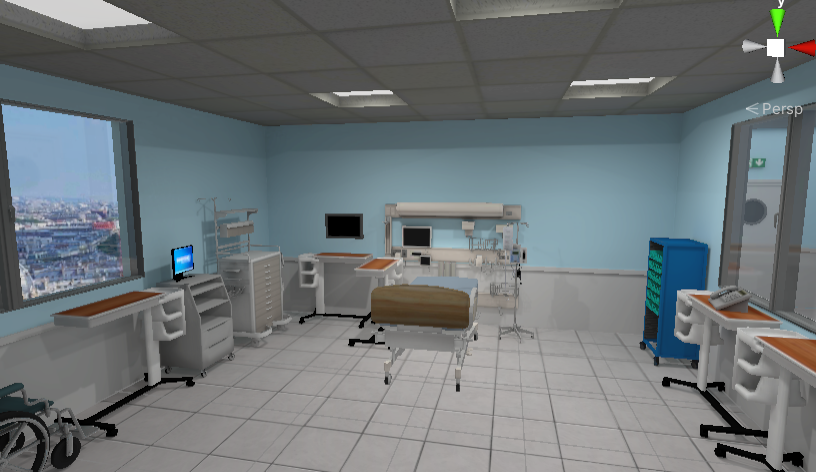
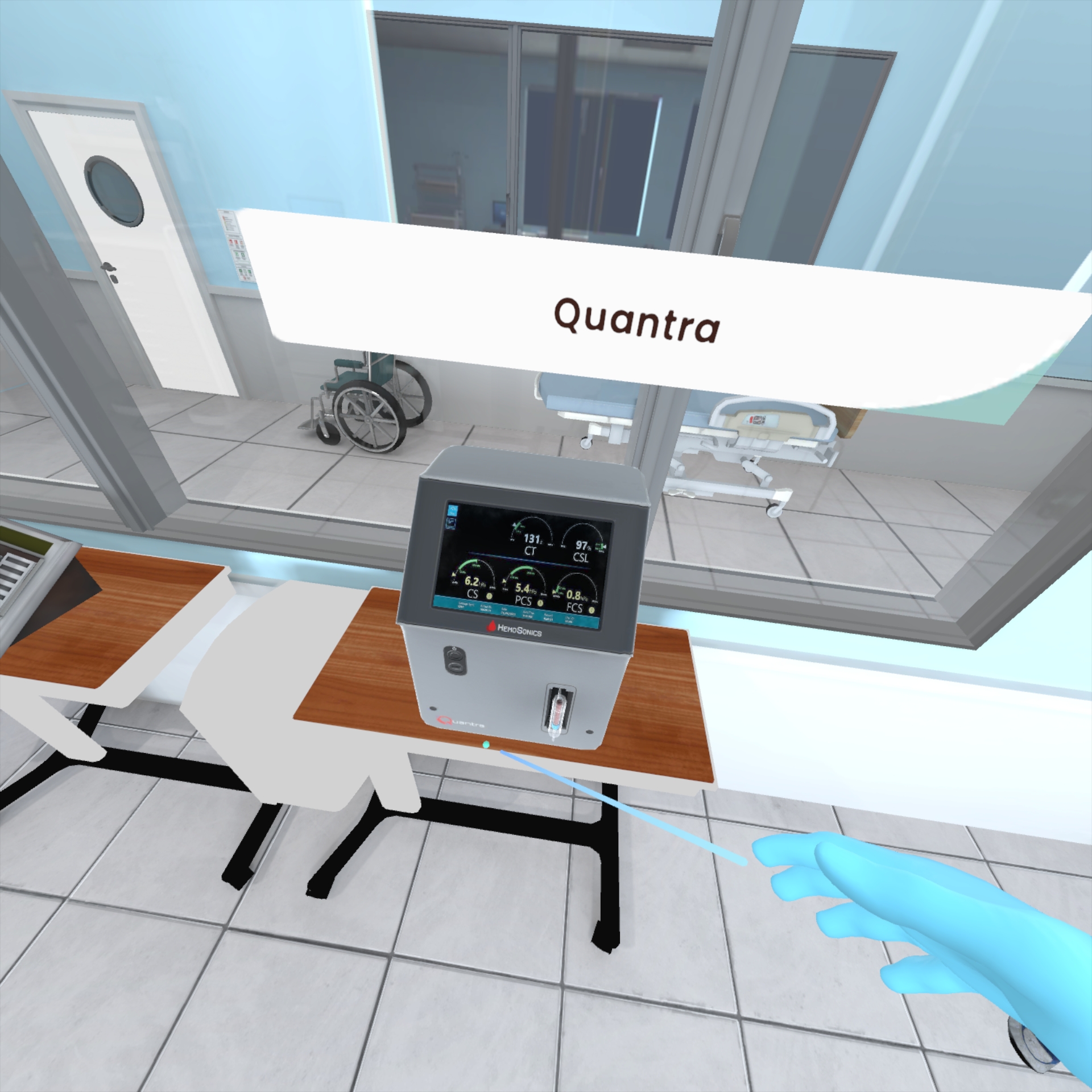
Polytraumatised is a multiplayer virtual reality serious game developed in Unity for medical training. The goal of the project is to simulate the management of a severe polytrauma patient in a realistic emergency room environment, allowing two players to collaborate as a senior and a junior doctor.
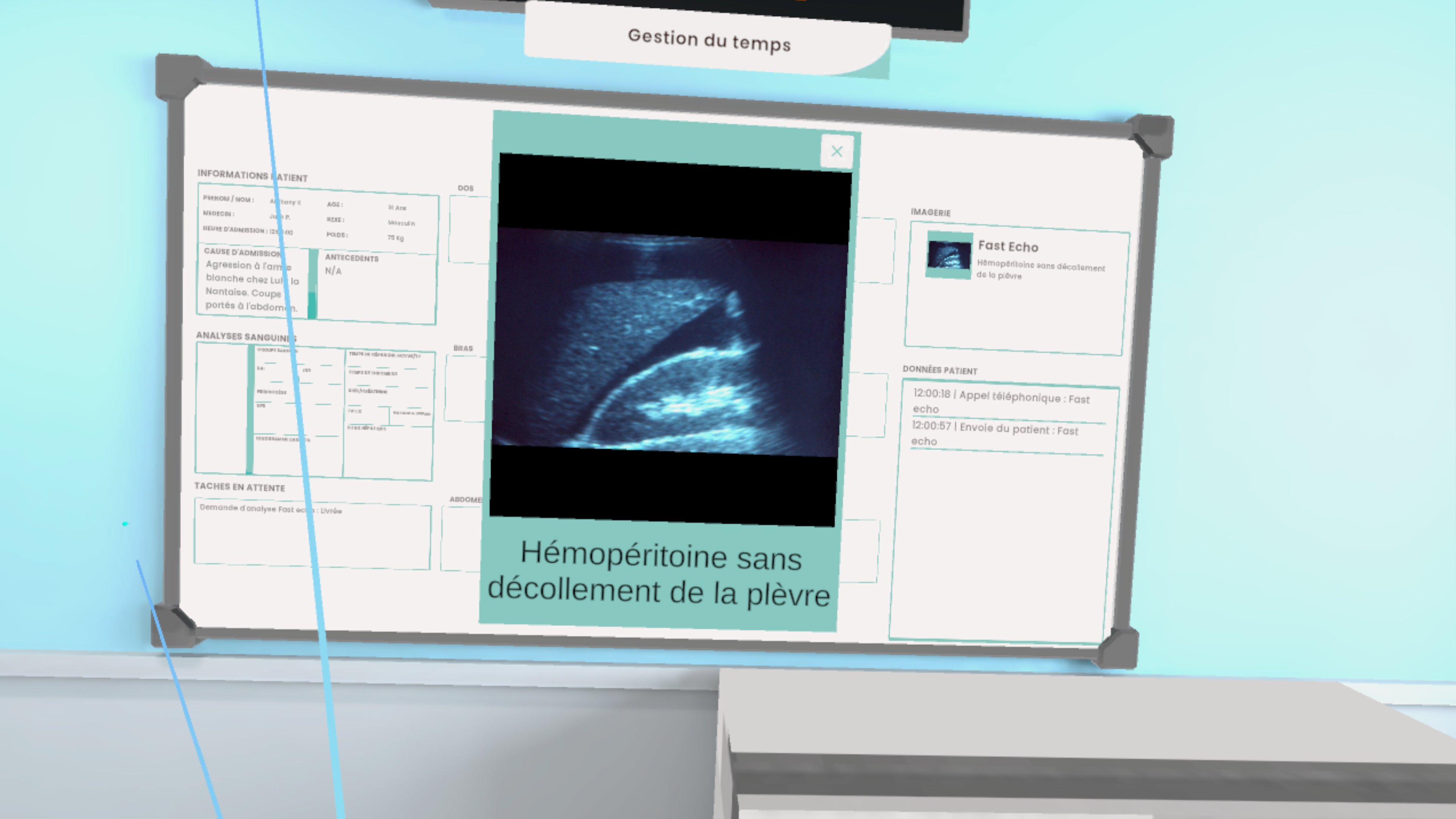
Players must perform a full emergency workflow: patient assessment, monitoring of vital signs, biological analysis, imaging exams (FAST ultrasound, chest X-ray, CT angiography), invasive procedures (peripheral and central venous access, arterial line, thoracic drainage, oxygen therapy, intubation), and therapeutic actions such as fluid resuscitation and vasoactive drugs. The scenario evolves dynamically with multiple stages of clinical deterioration, requiring players to interpret data, prioritize actions, and coordinate effectively.
The simulation emphasizes:
- Realistic medical logic based on clinical documentation
- Time pressure and parallel task management
- Multiplayer synchronization and role-based interaction
- Diegetic interfaces (monitors, medical tools, nurse menus)
- Pedagogical design focused on decision-making rather than scripted outcomes
The project was developed as a professional serious game for healthcare training, with a strong focus on technical robustness, UX in VR, and medical accuracy. Compatible with Pico 4, Meta Quest 3, and enterprise VR headsets.
Key Features:
- Multiplayer VR experience (senior / junior roles)
- Real-time patient vital simulation
- Dynamic clinical deterioration system
- Medical devices and tools interaction
- Diagnostic systems (FAST, X-ray, CT)
- Invasive procedures and monitoring
- Voice and UI-based guidance systems
- Scenario-driven pedagogical design
Technical Skills Demonstrated:
- Unity (C#)
- VR interaction systems
- Multiplayer networking
- State machines and scenario logic
- UI/UX for VR
- Simulation systems (vitals, time, events)
- Medical serious game design
- Real-time synchronization
Interactive Unity Mini-Games for Saint-Gobain
Unity Developer – Industrial / Corporate Engagement
Designed and developed two interactive Unity mini-games for Saint-Gobain, built around a shared timing and precision gameplay system and adapted to different spatial constraints.
The first experience focuses on vertical stacking, where users must precisely place moving elements to build a stable tower. The second adapts the same core mechanic to horizontal movement, requiring accurate alignment to construct a bridge.
Beyond gameplay, the project included production-ready enterprise features:
- Multi-language localization system
- Leaderboard displaying user scores and rankings
- Reusable and modular gameplay architecture
- Real-time scoring and feedback logic
- Performance-optimized Unity implementation
This project demonstrates the ability to design reusable systems, adapt mechanics to new constraints, and deliver polished, client-ready interactive experiences for large organizations.
Tools & Technologies: Unity, C#, modular gameplay systems, localization pipelines, UI systems, leaderboard & scoring logic, WebGL build
AR Web Experience for *Rebirth* Art Installation
WebGL / Augmented Reality – Artist Collaboration (Paris, FR)
Developed a browser-based augmented reality experience for the *Rebirth* art installation showcased through an online gallery at macgaw.fr.
The project uses AR image detection to recognize QR codes associated with printed artworks, and then overlays digital paintings directly in the user's camera view or WebGL scene. This allowed gallery visitors and remote viewers to interact with physical art through an engaging augmented reality layer.
- Web-based AR using image tracking for QR/marker recognition
- Dynamic 3D painting overlays triggered on recognized codes
- Seamless experience without installing an app — runs in mobile browsers
- WebGL rendering optimized for mobile and desktop devices
Tools & Technologies: Unity / WebGL / AR Image Tracking, QR Marker Detection, Custom Shader Integration
This project demonstrates advanced use of WebGL and AR technologies to enhance traditional artwork presentation with immersive, interactive digital layers that complement the physical gallery experience. Instead of relying on native mobile applications, the experience is entirely web-based, allowing users to engage with the installation directly through their device browser.
Unity Applications & Editor Tools (Ludo-Vic)
Unity Developer – Educational & Interactive Applications (Paris, FR)
Contributed to the development and production of multiple professional Unity applications, focusing on tooling, performance, UI/UX and cross-platform deployment.
I worked on a wide range of projects, from internal editor tools to full production applications published on the Google Play Store. My role covered both technical and creative aspects, including real-time 3D, backend communication, UI systems and workflow automation.
- Developed custom Unity editor tools to speed up team workflows
- Designed and implemented application UI/UX in Unity
- Optimized performance and fixed critical production bugs
- Implemented backend systems for data download via REST APIs
- Adapted applications for multiple platforms (mobile & desktop)
- Animated 3D characters and integrated interactive systems
Over the course of these projects, I participated in the successful release of 21 Unity applications on the Google Play Store, covering educational, simulation and interactive experiences.
Google Play Developer Page: View Published Applications
Tools & Technologies: Unity, C#, Editor Scripting, UI Systems, REST APIs, PHP, SQL, Android, Performance Optimization, 3D Animation
This experience demonstrates strong production-level Unity development skills, including tooling, architecture, optimization and real-world deployment pipelines.